My grandfather was a Dickens man. Every novel on the shelf, read and re-read, spines cracked, pages slightly yellowed. And all of it available to me from a very young age. Which is how I ended up having finished the complete works before I turned ten. Not a reading plan I’d necessarily prescribe, but here we are.
If you’ve been reading about bookish London on this site, you already know how much of this city Charles Dickens claimed as his own. He walked London compulsively (sometimes twenty miles a night) and it shows on every page. This is your complete guide to the novels, in the order he wrote them.
Fifteen novels, published between 1837 and 1870, almost all serialised in monthly or weekly instalments. The prestige TV of Victorian Britain, essentially.
The Novels in Order
1. The Pickwick Papers (1837)

Mr Samuel Pickwick and the members of his club embark on a series of comic journeys across England, getting into increasingly absurd misadventures along the way. Dickens’s debut novel, and the one that made him famous almost immediately. Lighter in tone than everything that follows — more picaresque comedy than social critique — but the energy and invention are unmistakable from the very first page.
2. Oliver Twist (1837–1839)

Born in a workhouse and passed between parishes, young Oliver Twist falls in with a gang of pickpockets in the back streets of London. A searing attack on the Poor Law and the treatment of children in Victorian England, and one of the earliest social novels in the language. Fagin, the Artful Dodger, and Bill Sikes remain among the most recognisable characters Dickens ever created.
3. Nicholas Nickleby (1838–1839)
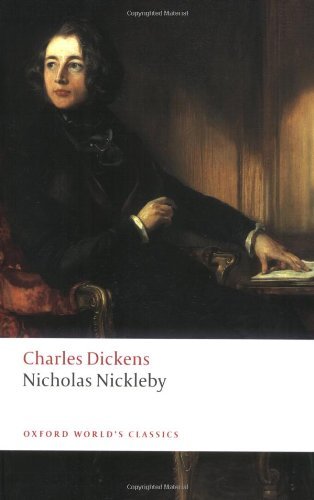
After his father dies bankrupt, Nicholas Nickleby must find a way to support his mother and sister while navigating a brutal Yorkshire boarding school, a travelling theatre company, and the machinations of his villainous uncle Ralph. Dickens at his most entertaining, and one of his most warm-hearted novels.
4. The Old Curiosity Shop (1840–1841)
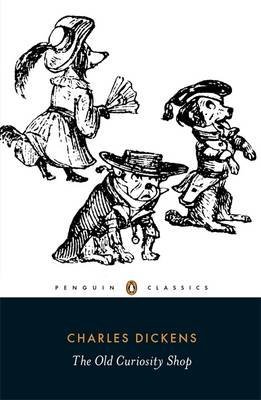
Little Nell and her grandfather are forced to flee London when their home falls into the hands of the monstrous moneylender Quilp. When serialised, readers on both sides of the Atlantic awaited each new instalment with genuine anguish — crowds gathered at the New York docks waiting for ships carrying the latest chapter. The death of Little Nell became one of the great public literary events of the Victorian era. Oscar Wilde called it impossible to read without laughing. Make of that what you will.
5. Barnaby Rudge (1841)
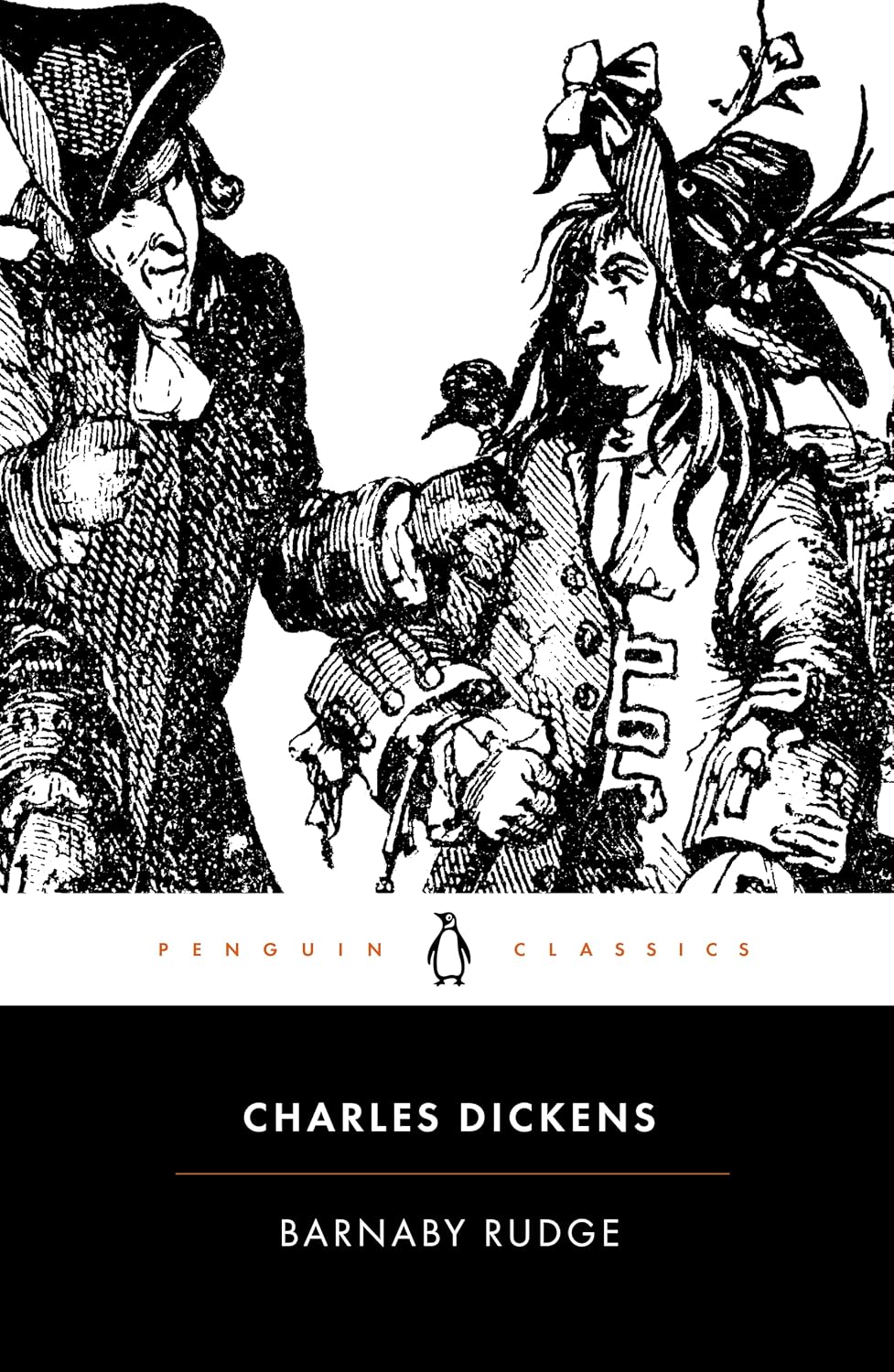
Set against the backdrop of the Gordon Riots of 1780, Barnaby Rudge is a story of mystery and suspense which begins with an unsolved double murder and goes on to involve conspiracy, blackmail, abduction and retribution. Through the course of the novel fathers and sons become opposed, apprentices plot against their masters and anti-Catholic mobs rampage through the streets. With its dramatic descriptions of public violence and private horror, its strange secrets and ghostly doublings, Barnaby Rudge is a powerful, disturbing blend of historical realism and Gothic melodrama.
6. Martin Chuzzlewit (1843–1844)

A dark comedy, full of greed, manipulation, and duplicity intertwined with humility and generosity, “Martin Chuzzlewit” is an exemplary story that carries a timeless message of selfless kindness for others. First published serially from 1842 to 1844, it is the story of young Martin Chuzzlewit, who has been raised by his grandfather. He has fallen in love with his grandfather’s ward and caretaker, the young orphan Mary Graham. Martin’s grandfather does not approve and young Martin alienates himself from his grandfather and begins working for the corrupt and dishonest Seth Pecksniff. Though he meets the kind Tom Pinch during this apprenticeship, Martin is fired and decides to travel to the United States to find his fortune. However, this new and wild land is a much harsher place than Martin was prepared for and he nearly dies of malaria. The experience matures and improves him though, and upon his return he reconciles with his grandfather and reveals the crimes of other characters in Dickens’s exceptional cast of characters, particularly those of Pecksniff and the arch-villain Jonas Chuzzlewit.
7. Dombey and Son (1846–1848)

Paul Dombey is a wealthy merchant consumed by his business and his desire for a male heir to carry on the family name. His daughter Florence loves him completely; he barely registers her existence. A novel about pride, emotional neglect, and the human cost of placing commerce above everything else. One of Dickens’s most quietly devastating works, and frequently overlooked.
8. David Copperfield (1849–1850)

In David Copperfield – the novel he described as his ‘favourite child’ – Dickens drew on his own experiences to create one of his most moving and enduringly popular works, filled with tragedy and comedy in equal measure. It is the story of a young man’s adventures on his journey from an unhappy childhood to the discovery of his vocation as a novelist. Among the gloriously vivid cast of characters he encounters are his tyrannical stepfather, Mr Murdstone; his brilliant but unworthy school-friend Steerforth; his formidable aunt, Betsey Trotwood; the eternally humble yet treacherous Uriah Heep; frivolous, enchanting Dora; and the magnificently impecunious Micawber, one of literature’s great comic creations.
9. Bleak House (1852–1853)
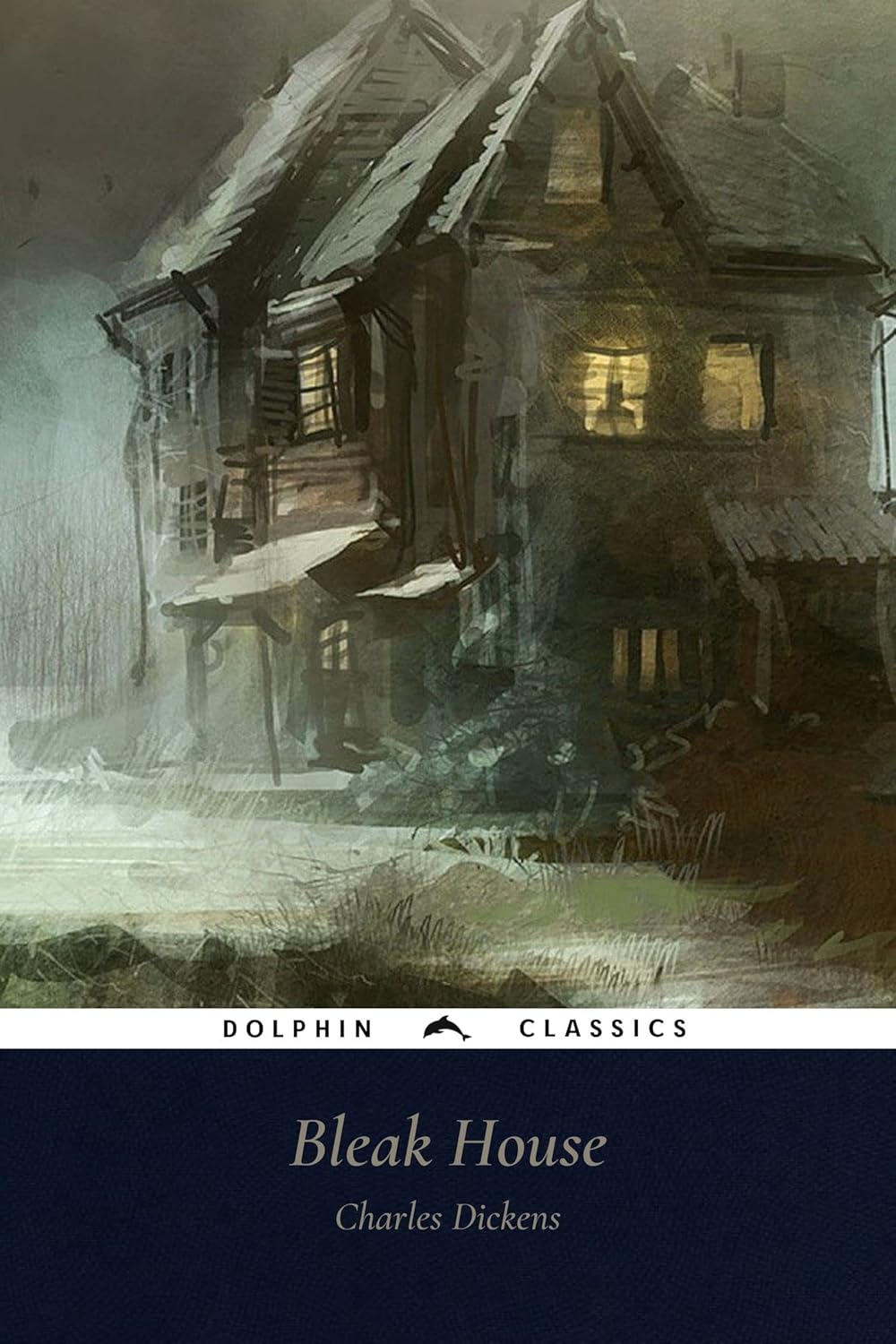
As the interminable case of Jarndyce and Jarndyce grinds its way through the Court of Chancery, it draws together a disparate group of people: Ada and Richard Clare, whose inheritance is gradually being devoured by legal costs; Esther Summerson, a ward of court, whose parentage is a source of deepening mystery; the menacing lawyer Tulkinghorn; the determined sleuth Inspector Bucket; and even Jo, the destitute little crossing-sweeper. A savage, but often comic, indictment of a society that is rotten to the core, Bleak House is one of Dickens’s most ambitious novels, with a range that extends from the drawing rooms of the aristocracy to the poorest of London slums.
10. Hard Times (1854)

Dickens’s novel honouring the value of the human heart in an age of materialism centres on Coketown, where Mr Thomas Gradgrind, school owner and model of Utilitarian success, feeds his pupils and his family with facts, banning fancy and wonder from young minds. As a consequence his obedient daughter Louisa becomes trapped in a loveless marriage, and his son Tom rebels to become embroiled in crime. As their fortunes cross with those of a free-spirited circus girl and a victimized weaver, Gradgrind is forced to question everything he believes in.
11. Little Dorrit (1855–1857)

When Arthur Clennam returns to England after many years abroad, he takes a kindly interest in Amy Dorrit, his mother’s seamstress, and in the affairs of Amy’s father, William Dorrit, a man of shabby grandeur, long imprisoned for debt in Marshalsea prison. As Arthur soon discovers, the dark shadow of the prison stretches far beyond its walls to affect the lives of many, from the kindly Mr Panks, the reluctant rent-collector of Bleeding Heart Yard, and the tipsily garrulous Flora Finching, to Merdle, an unscrupulous financier, and the bureaucratic Barnacles in the Circumlocution Office. A masterly evocation of the state and psychology of imprisonment, “Little Dorrit” is one of the supreme works of Dickens’s maturity.
12. A Tale of Two Cities (1859)

After eighteen years as a political prisoner in the Bastille the aging Dr Manette is finally released and reunited with his daughter in England. There two very different men, Charles Darnay, an exiled French aristocrat, and Sydney Carton, a disreputable but brilliant English lawyer, become enmeshed through their love for Lucie Manette. From the tranquil lanes of London, they are all drawn against their will to the vengeful, bloodstained streets of Paris at the height of the Reign of Terror and soon fall under the lethal shadow of La Guillotine.
13. Great Expectations (1860–1861)

A terrifying encounter with the escaped convict Abel Magwitch in a graveyard on the wild Kent marshes; a summons to meet the bitter, decrepit Miss Havisham and her beautiful, cold-hearted ward Estella at Satis House; the sudden generosity of a mysterious benefactor – these form a series of events that change the orphaned Pip’s life forever, and he eagerly abandons his humble station as an apprentice to blacksmith Joe Gargery, beginning a new life as a gentleman. Charles Dickens’s haunting late novel depicts Pip’s education and development through adversity as he discovers the true nature of his identity, and his ‘great expectations’.
This definitive version uses the text from the first published edition of 1861. It includes a map of Kent in the early nineteenth century, and appendices on Dickens’s original ending and his working notes, giving readers an illuminating glimpse into the mind of a great novelist at work.
14. Our Mutual Friend (1864–1865)

Our Mutual Friend centres around an inheritance. One night, a riverman and his daughter discover a body in a river outside of London. The body is that of John Harmon, a young man who was supposed to return to England in order to claim his father’s inheritance. But now that the young man has been murdered, the money will now be given to a pair of old, naïve servants named Mr. and Mrs. Boffin. Right on cue, a whole bunch of shifty folks come out of the woodwork to see what they can get out of the Boffins.
Dickens depicts a dark, horrific London with the use of satire and through the lives of many different characters, such as Gaffer Hexam, who scavenges the river for corpses; the seductive, mercenary Bella Wilfer; the social-climbing Veneerings; and the unscrupulous street-trader Silas Wegg. This work is deeply metaphorical in its depiction of death and regeneration in a metropolis controlled by the fetid Thames and the corrupting power of money.
15. The Mystery of Edwin Drood (1870)

Edwin Drood is contracted to marry orphan Rosa when he comes of age, but when they find that duty has gradually replaced affection, they agree to break off the engagement. Shortly afterwards, in the middle of a storm on Christmas Eve, Edwin disappears. Beyond this there are further intrigues: the dark opium underworld of the sleepy cathedral town of Cloisterham, and the sinister double life of choir-master Jasper, whose drug-fuelled fantasy life belies his appearance. Dickens died before completing Edwin Drood, leaving generations of readers to try and solve its tantalizing mystery.
honourable mention
novella – A Christmas Carol (1843)
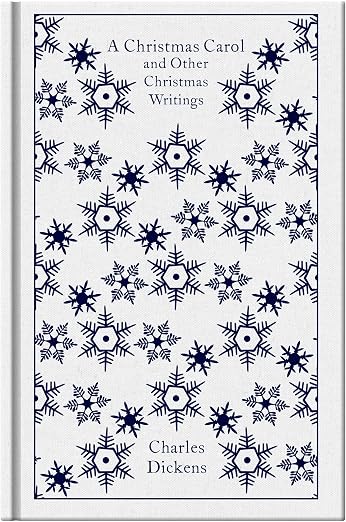
A Christmas Carol tells the tale of Ebenezer Scrooge, a miserly old man who is visited by three ghosts on Christmas Eve. Through this spiritual journey, Scrooge learns to let go of his past and embrace the joys of the holiday season. This beloved story is sure to bring warmth and cheer to readers of all ages. With its timeless message of redemption and joy, A Christmas Carol is the perfect book to bring out the spirit of the holidays
Where to Start
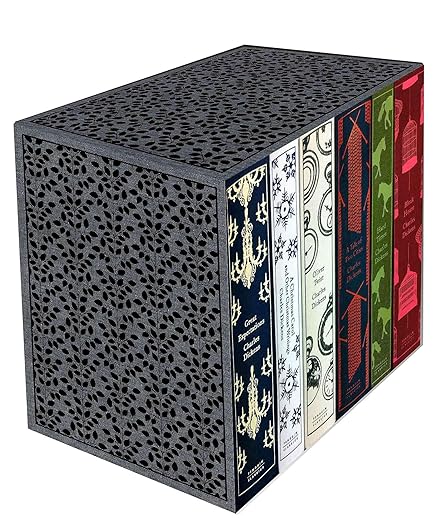
Start Here. With this box set. His best works, and also, some beautiful hardbacks to decorate your bookshelves with.
But also my number one recommendation, always, is Great Expectations. It’s my favourite, and I think it’s the perfect gateway novel: not too long, not too sprawling, the plot actually moves, and the characters are so vivid you feel like you’ve met them. Miss Havisham alone is worth the price of entry. Start here.
If you’ve done Great Expectations and want the next level: Bleak House. This is the big one. Longer, denser, more digressive, but it pays off. When people say Dickens is a genius, this is the evidence they’re citing.
A Christmas Carol technically doesn’t make this list because it’s a novella, not a novel, but everyone knows Scrooge, everyone knows Tiny Tim, and if you haven’t actually read it (as opposed to watched seventeen film adaptations of it), it’s short enough that you have no excuse. Read it in December. Obviously.
And A Tale of Two Cities. Look, it’s brilliant. Genuinely. But this is the one you read when you’re fully committed and ready to go all the way with Dickens. Not the starting point. Save it for when you’re deep in and want something that hits different. You’ll know when you’re ready.