William Shakespeare wrote somewhere between 37 and 39 plays. Scholars still debate the exact number, and at least one play (Cardenio) is considered lost entirely. He also wrote 154 sonnets and several longer poems. He did all of this between roughly 1590 and 1613, which is the kind of output that makes you feel slightly inadequate about your own productivity.
Here’s the thing about Shakespeare that people sometimes forget: the plays were never meant to be read. They were written to be performed, i.e. spoken aloud, acted out, experienced in a crowd. Which is why, over 400 years later, they’re still being staged everywhere from the Globe Theatre on the South Bank to school halls in every country in the world. The language has been updated, the settings reimagined, the characters transplanted into entirely different worlds. Sons of Anarchy (yes, the motorcycle club action drama) is essentially Hamlet in a leather cut, and it works completely, because the bones of that story are indestructible. That’s what timeless actually means.
The plays are typically grouped into three categories: Comedies, Tragedies, and Histories. There’s also a fourth group: the Romances or Late Plays, which Shakespeare wrote towards the end of his career and which don’t sit neatly in any of the other three.
The Comedies
- The Two Gentlemen of Verona (c.1590–91)
- The Taming of the Shrew (c.1590–94)
- The Comedy of Errors (c.1594)
- Love’s Labour’s Lost (c.1594–95)
- A Midsummer Night’s Dream (c.1595–96)
- The Merchant of Venice (c.1596–97)
- The Merry Wives of Windsor (c.1597–98)
- Much Ado About Nothing (c.1598–99)
- As You Like It (c.1599–1600)
- Twelfth Night (c.1601–02)
- Troilus and Cressida (c.1602)
- All’s Well That Ends Well (c.1604–05)
- Measure for Measure (c.1603–04)
The Tragedies
- Titus Andronicus (c.1591–92)
- Romeo and Juliet (c.1594–96)
- Julius Caesar (c.1599)
- Hamlet (c.1600–01)
- Othello (c.1603–04)
- King Lear (c.1605–06)
- Macbeth (c.1606)
- Antony and Cleopatra (c.1606–07)
- Coriolanus (c.1608)
- Timon of Athens (c.1605–08)
The Histories
- Henry VI, Part 1 (c.1591–92)
- Henry VI, Part 2 (c.1590–91)
- Henry VI, Part 3 (c.1590–91)
- Richard III (c.1592–94)
- Richard II (c.1595–96)
- King John (c.1594–96)
- Henry IV, Part 1 (c.1596–97)
- Henry IV, Part 2 (c.1597–98)
- Henry V (c.1599)
- Henry VIII (c.1613, co-written with John Fletcher)
The Romances (Late Plays)
- Pericles (c.1607–08)
- Cymbeline (c.1609–10)
- The Winter’s Tale (c.1610–11)
- The Tempest (c.1611)
- The Two Noble Kinsmen (c.1613–14, co-written with John Fletcher)
The Sonnets
Shakespeare wrote 154 sonnets, published in 1609. They’re typically addressed to two figures: a young man (Sonnets 1–126) and a “Dark Lady” (Sonnets 127–154), though who these people actually were has been debated for four hundred years and remains unresolved. The sonnets are love poems, but they’re also poems about time, mortality, jealousy, obsession, and the question of whether art can make anything last forever.
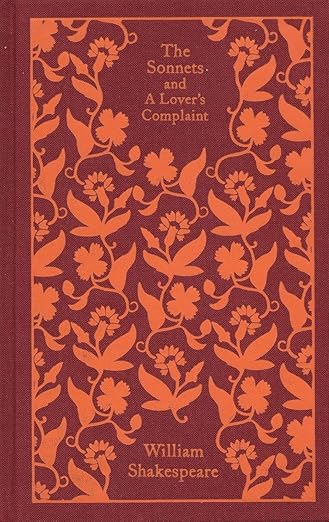
The sonnets are listed 1 through 154 and are traditionally read in that order, though each stands alone. A few essential ones to know:
If you’ve never read a Shakespeare sonnet and want to understand what the fuss is about, start with Sonnet 18 (“Shall I compare thee to a summer’s day?”) — the most famous, and justifiably so. Then go to Sonnet 29 (“When, in disgrace with fortune and men’s eyes”), which Dame Judi Dench recited from memory on the Graham Norton Show, surrounded by Arnold Schwarzenegger and a very silent studio audience. Watch it and try not to cry. I’ll wait.
Where to Start
Let’s start with Romeo and Juliet , and let’s start with the expert opinion.
I had the chance to interview Professor Lucy Munro from King’s College London; a Shakespeare scholar who has spent her career studying this exact question of who these plays are for and why they still matter. Her verdict on Romeo? Most overrated character in the canon. Her words. And I concur.
And honestly, she’s not wrong.
Romeo and Juliet is not a love story to aspire to. It is a tragedy about two teenagers who knew each other for approximately four days and made a series of catastrophic decisions. If you want a love like Romeo and Juliet, what you actually want is better communication skills and fewer feuding families. Read it again as an adult and you’ll see exactly what I mean.
That said, as a play, as a piece of writing, as an introduction to what Shakespeare does with language? It is still the perfect starting point. Read it first. Just go in with your eyes open about what it actually is.
Then Hamlet. This is the one that Sons of Anarchy is based on. A prince whose father has been murdered by his uncle, who has then married his mother. Everything that follows is Hamlet trying to decide what to do about it while also questioning the nature of existence, consciousness, and whether action is even possible. It has been performed continuously for over 400 years and it still feels urgent. There’s a reason for that.
Othello next. A Black general in the Venetian army is manipulated by his lieutenant Iago into believing his wife Desdemona has been unfaithful. Iago is one of the great villains in all of literature (again, co-signed by the expert). Not because he’s powerful, but because he’s petty, and his pettiness destroys everyone around him. This one will make you furious in the best possible way.
After those three you’ll have the full picture of what Shakespeare can do. For a comedy, A Midsummer Night’s Dream. For something that will genuinely floor you, King Lear.
And two more, because I asked Professor Munro what play everyone should read, and her answer wasn’t one of the famous ones. She said The Two Noble Kinsmen, co-written with John Fletcher, which barely gets a mention in most Shakespeare guides. Her favourite play is Troilus and Cressida: a cynical, deeply strange take on the Trojan War that sits in the comedies list and belongs nowhere near it. Both are in the complete plays list above if you want to go where the experts go.