One of the things I love most about London is that it rarely feels like a single city.
Walk far enough and the atmosphere changes completely. A busy high street gives way to quiet residential streets. A cluster of modern office buildings suddenly opens onto a churchyard that has stood for centuries. Entire neighbourhoods seem to exist in their own little worlds.
This is one reason people often refer to London’s “villages.”
They’re not villages in the traditional sense, of course. They’re neighbourhoods, districts, and corners of the city that have managed to retain a distinct identity despite being part of one of the largest cities in Europe.
For readers, writers, and anyone interested in literary history, these London villages offer something even more appealing.
Stories.
Some are linked to famous authors. Others are filled with independent bookshops, historic buildings, quiet gardens, and streets that seem designed for wandering with a book tucked under your arm.
If you’re looking to explore a more bookish side of the capital, these are some of London’s most literary neighbourhoods.
Bloomsbury: London’s Literary Heart
If literary London had a capital, it would probably be Bloomsbury.
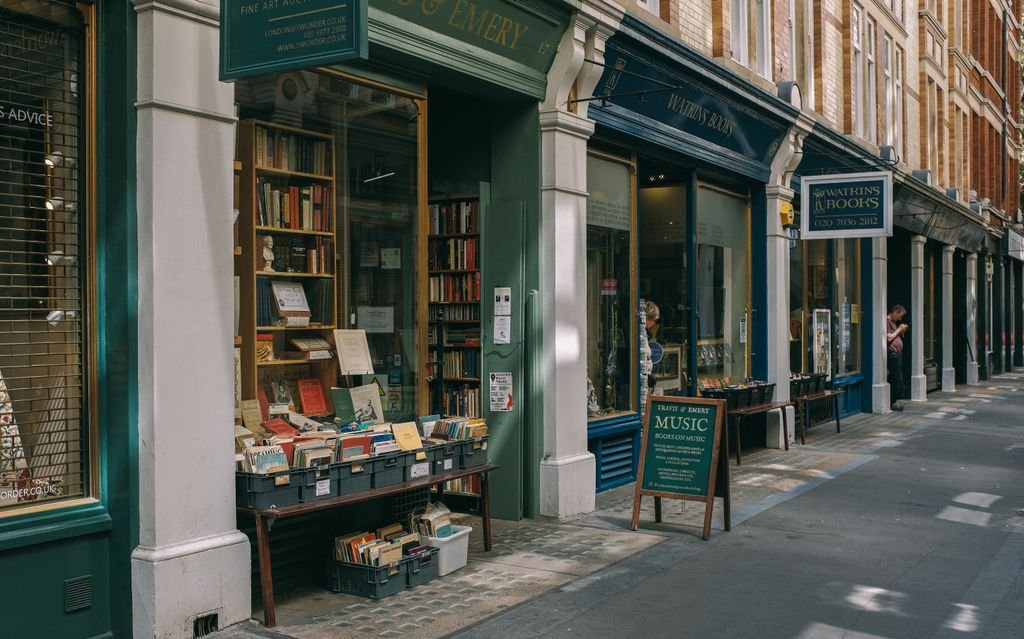
For generations, the area has been associated with writers, publishers, academics, and readers. The British Museum sits at its centre, while the surrounding streets are filled with Georgian terraces, garden squares, and enough literary history to occupy several lifetimes.
Virginia Woolf lived here.
The Bloomsbury Group gathered here.
Countless publishers, bookshops, and literary institutions continue to call the area home.
What makes Bloomsbury particularly enjoyable isn’t just its history. It’s the atmosphere.
You can spend an afternoon wandering between Russell Square, Gordon Square, and the surrounding streets, stopping in bookshops and cafés before ending the day with a visit to one of London’s many cultural institutions.
For book lovers, few places feel more naturally suited to lingering.
Hampstead: The Village of Writers
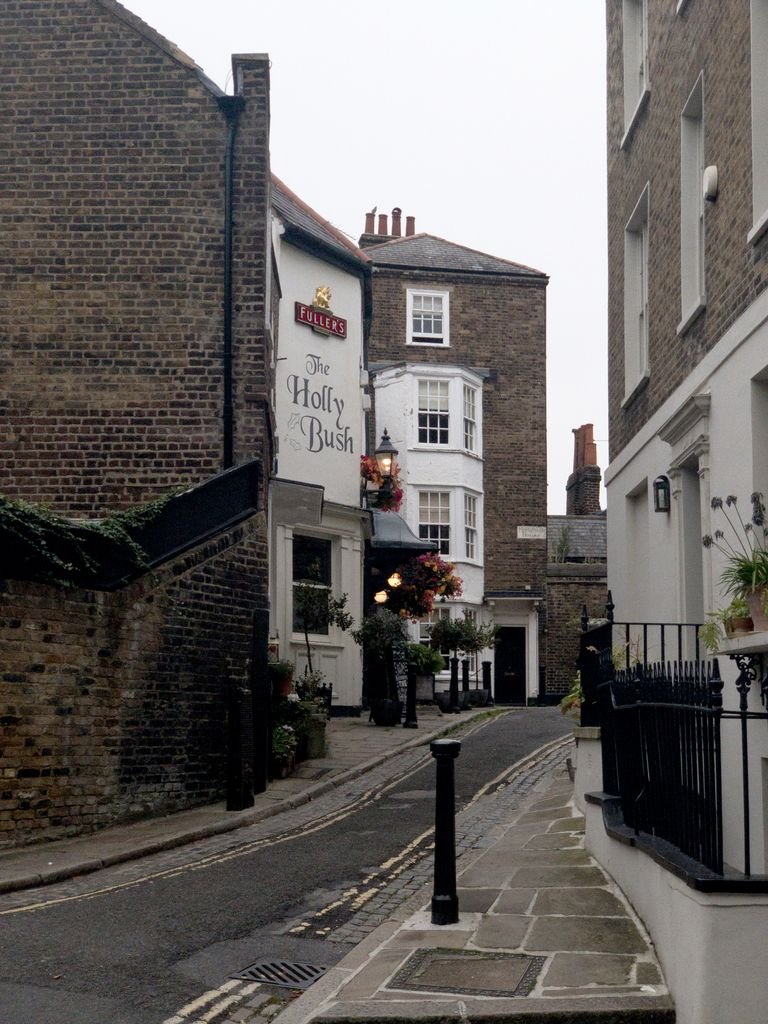
Despite being part of London, Hampstead often feels like a village in the traditional sense.
Its winding streets, independent shops, and leafy atmosphere create a sense of separation from the pace of central London.
It’s long attracted writers, artists, and intellectuals.
John Keats lived here.
Daphne du Maurier had connections to the area.
Countless authors have found inspiration in Hampstead’s streets, houses, and famous heath.
Even if literary history isn’t your primary interest, Hampstead rewards slow exploration.
Browse a bookshop. Sit in a café.
Take a book to Hampstead Heath and spend an hour reading beneath the trees.
Some neighbourhoods seem to encourage slowness. Hampstead is one of them.
Highgate: Literature, History, and Quiet Streets
Just north of Hampstead lies Highgate, another of London’s most distinctive villages.
Known for its historic architecture and famous cemetery, Highgate has long attracted writers and thinkers.
The area retains an old-world charm that feels increasingly rare.
Quiet streets wind past Victorian houses.
Independent businesses sit alongside historic pubs.
The pace feels noticeably different from central London.
For readers, Highgate offers something many modern spaces struggle to provide: room to think.
It’s easy to imagine writers finding inspiration here.
It’s even easier to understand why so many chose to stay.
Clerkenwell: London’s Storytelling District
Clerkenwell doesn’t always appear on lists of literary destinations, but it should.
Historically, the area has been associated with printing, publishing, journalism, and storytelling in various forms.
Its streets are layered with history.
Medieval remnants sit alongside converted warehouses and contemporary creative spaces.
Walking through Clerkenwell often feels like moving between different versions of London simultaneously.
For readers interested in the city’s hidden histories, few neighbourhoods are more rewarding.
Look closely and stories seem to emerge from almost every street.
Richmond: A Riverside Retreat
Richmond demonstrates that literary London isn’t confined to the city centre.
Located beside the Thames, the area offers beautiful riverside walks, green spaces, and a slower pace than many central districts.
Writers have long been drawn to landscapes that encourage reflection, and Richmond provides plenty of opportunities for exactly that.
A walk along the river with a good book in your bag remains one of the simplest pleasures London has to offer.
Sometimes a bookish day out doesn’t require an itinerary.
Just a destination and enough time to wander.
Greenwich: Maritime History and Literary Atmosphere
Greenwich is often celebrated for its naval history, but it also offers plenty for readers.
Its combination of historic buildings, museums, green spaces, and riverside views creates an environment that feels rich with narrative possibility.
The area rewards curiosity.
A turn down one street reveals centuries-old architecture.
Another leads towards the river.
Another opens onto a quiet corner that feels surprisingly removed from the rest of London.
For readers who enjoy wandering through places that feel layered with stories, Greenwich is difficult to beat.
Dulwich: One of London’s Hidden Literary Corners
Dulwich rarely receives the same attention as Bloomsbury or Hampstead, but that’s part of its charm.
The area feels calm, residential, and quietly cultured.
Bookshops, galleries, and green spaces contribute to an atmosphere that encourages lingering rather than rushing.
It’s the sort of place where an afternoon can disappear pleasantly between a café, a bookshop, and a walk through the surrounding streets.
For anyone interested in living slowly or exploring London’s quieter side, Dulwich is worth seeking out.
Why Book Lovers Are Drawn to London’s Villages
Perhaps the appeal of these neighbourhoods isn’t really about literary history at all.
Or at least not entirely.
What many of these places share is a sense of pace.
They encourage wandering rather than rushing.
Browsing rather than buying.
Observing rather than simply passing through.
In a city that can sometimes feel overwhelming, London’s villages offer something different.
They create space for curiosity.
And curiosity, after all, sits at the heart of both reading and travel.
Final Thoughts
One of the joys of being bookish in London is discovering that literary history isn’t confined to museums or famous landmarks.
It’s woven into neighbourhoods.
Into streets.
Into parks, cafés, libraries, and bookshops.
Whether you’re exploring Bloomsbury’s literary heritage, wandering through Hampstead with a novel in hand, or discovering a quieter corner of Dulwich, London’s villages offer endless opportunities to slow down and notice the stories around you.
The best literary destinations are not always the most famous.
Sometimes they’re simply the places that make you want to stay a little longer.